I've had a new idea for my blog. Since moving here to Chicago, I have been slowly getting to know some of the people in our new congregation, Redeemer Lutheran Church.
In the spirit of a "getting to know you" project, I've decided to start with some cooking. I was given the newest church cookbook on the day of my husband's installation. It is called "Palate Pleasers." What better way to get to know some of the cooks in the congregation than by using their recipes?
So, I pulled the book out today, and decided I could try some recipes. This all may sound very "Julie and Julia"-like, and I guess I mean it to. I read the book, Julie and Julia by Julie Powell several years ago, and loved the concept. She decided to make all of Julia Child's recipes (in her Joy of Cooking book) over the course of a year and write about it on her blog.
However, my version will use the church cookbook for my inspiration. Tonight's recipe: Savory Beef Strudel.
Any time a main dish recipe has a dessert term in the name, it's going to be made in my kitchen. I have a terrible sweet tooth. I don't dive head-first into a bag of Doritos, but Oreos at 4 pm sound like a terrific addition to my diet. (Sad, I know.) One of my other favorite main dishes is the classic Bisquick recipe called cheeseburger pie. I mean, burgers, cheese, and pie--how can it get any better?
So tonight's recipe involves strudel. Interestingly, the word "strudel" comes from the German word for whirlpool, apparently because if you take a cross-section of a strudel you can see a sort of spiral shape. Apple strudel is the most common recipe consisting of layers of strudel dough and filling. The strudel dough is very labor-intensive to make, and my recipe, while it still took about 45 minutes to prepare, saved me the labor of making the dough. Instead, it called for phyllo dough (puff pastry dough).
The first time I used phyllo dough in a recipe, I thought the dough itself was the packaging. The sheets are so paper-like that I kept picking up layer after layer trying to get to the good stuff. Alas, the "good stuff" was what I was ripping through and tearing to shreds.
Tonight I knew better, remembering that foray into phyllo dough in my younger years. This recipe is sort of like lasagne. I made a meat mixture with ground beef, celery, onion, garlic, salt and pepper, and layered that between buttered layers of the phyllo. Over the top of the layers went a milk and egg mixture. The whole thing is now in the oven cooking.
Well, the timer's about to ding, so I'd better sign off. I'll let you know how the recipe turned out!
Thursday, February 18, 2010


My flowers are in bloom
 As promised, here are some photos! Everything is a work in progress, but I do feel like we're MAKING progress, so that is good. Here is a photo of our "icon wall"--the idea we got from Dr. D. Scaer. These are our hand-painted and favorite icons from various places: Ethiopia, Greece, and one commissioned by us by a Russian icon painter. That was pretty awesome (it's the one to the left of the cross of St. Nicholas).
 This is my Jasmine plant that I bought at Trader Joes. It's now in bloom. Love it!
 Here is a photo of our new living room furniture (which, of course, Lucy just HAD to sit on).
 Next are some odd ceiling pictures, but let me explain. The first is our ceiling fan which we now have put up in the kitchen, in place of the green pool-table-esque light fixture.
 The second photo shows a much more reasonable placement of our dining room fixture (and I haven't hit my head on it once since it is now over the center of the table).
 Next, we have the non-racing stripes in the bottom of the bathtub. Again, this may seem an odd photo, but when we moved in there were these stick-on white non-skid stripes in a zig zag pattern. It took me some elbow grease, but I got rid of those, and now the coral bathroom looks a tad bit better. Also, our wonderful handymen installed a bath fan yesterday, so now it's much better.
 This is a photo of our new carpet on the stairs. Love it! We're also getting runners for the upstairs hallway and the area in the living room from the front door to the kitchen.
 We also had a really plush shag carpet put in the master bathroom. I could sleep on it: it's that soft and wonderful!
 Next, is the new fabulous kitchen sink faucet. The older one was gold/brass and was leaking and not looking all that great. This is the new update! I'm going to switch all of the cabinet pulls to silver/chrome and see how that works.
 This is the fabulous table/chairs I found on Craigslist.
Wednesday, February 10, 2010
Finally a few pictures
 Admittedly, these are not the best photos, and I have many more to add, but they capture at least a couple of things.
1. The installation of the new dishwasher. Yay! This day we also had a garbage disposal put in. Much needed upgrades, and I am so thankful for them (those can be my Valentine's gift). :)
2. Below are some pictures of the recent snowstorm that hit Chicago. It pretty much snowed for 36 hours straight. We don't have it nearly as bad as farther east, but still, it is up to Lucy's belly. Also, I've added a photo of our sunroom (still very much in transition, as you can tell). The sun is streaming in the window, brightening up the room. It's not captured well on film, but it looks cheery this morning.


Tuesday, February 02, 2010
The fun part of unpacking
One of the best (only?) things about unpacking is the decorating. We've gotten to the point where much of the house is unpacked. The bedrooms are finished, the linen closet is filled, the laundry room is organized, the kitchen is mostly done, and my work space is functional--oh, and the family room (maybe most important!) is comfy and cozy. Today I was working on the the living room. In every new space, the decor fits in a little differently. I'm trying to use what we have in a new way. Which candles fit where? Where should we hang the tulip picture? etc. It all takes time, but it's nice to see things coming together.
Monday, February 01, 2010
February already?
 I can't believe how quickly the last few weeks have passed during our relocation process. Each day, each hour, something else gets unpacked and put away in our new house, so things are definitely settling down as the house gets in shape.
 Scott's installation and dinner reception were last Sunday. It was a lovely service, and the dinner was magnificent. Wow--what an incredibly warm welcome! We are just so thrilled to be here. We know that moving is a roller coaster, and we'll have up and down days, but we've been so pleased and thankful for all of the warm and generous gifts the people of Redeemer have given us. Thank you!
Thursday, January 21, 2010
The lost and the found
So here are things I've found in the last couple of days:
1. my wedding ring (yay! -- I had put it in a "safe" place so it wouldn't get ruined up with all the messiness of the move, but then couldn't find it right away).
2. my jeans!
3. my speakers for my office (so right now I'm listening to Pandora, and my speakers are working!).
4. the bus stop for Jacob--his first bus ride to school ever today.
The missing:
1. most of our drinking glasses...I haven't gotten back to unpacking more of the kitchen yet. Most of everything else for the kitchen is unpacked, however.
2. The batteries (AA and AAA type). So for now my clock is just going to say 4:00.
3. My extra chapsticks and lotion. Ooh! I need those!
Okay, will try to post photos later...
Wednesday, January 20, 2010
Another update
So, this morning I've been grading (for my online course), filling up the crawl space with storage stuff, and cleaning the upstairs bathroom and emptying boxes for the linen closet. I think we'll be okay as far as storage goes, but I'm still early in the unpacking process. It's a good house; it just needs some TLC and some replacement "parts."
Jacob got off to school today (his first day) and then called to say it's an early dismissal day. So, that's probably good. He had a peer "ambassador" meet him for the day, so hopefully that will help acclimate him to the school.
Cool news! Scott is featured in this article in what looks like a local edition of the Chicago Sun-Times.
Jacob got off to school today (his first day) and then called to say it's an early dismissal day. So, that's probably good. He had a peer "ambassador" meet him for the day, so hopefully that will help acclimate him to the school.
Cool news! Scott is featured in this article in what looks like a local edition of the Chicago Sun-Times.
Tuesday, January 19, 2010
At last
Well, as you may have guessed, life has been hectic and crazy the last few days. I've carved out a little quiet spot amidst all of the boxes and chaos in the new house. I'll take a photo and post it soon. Right now I just wanted to give a little update.
Jacob is all set up for school tomorrow, and he's adapting surprisingly well. Probably better than I am. But all is well. We're slowly becoming more organized and figuring out what will need to be fixed/replaced in the house. We're also finding nooks and crannies for storage. The house in Fort Wayne had tons of storage space. In this house, it's just different. We have a big crawl space, but closet space is hard to come by. Figuring out where everything goes is just different. I have a lot more storage space in the utility room, for example, but less in the bedrooms, etc.
I had lots of help on Friday and over the weekend. The other pastor's wife, Jan, came and helped for HOURS on Friday, cleaning and scrubbing out the new kitchen. It was so awesome. I don't think my refrigerator has ever been as clean as it is right now. Even when it was brand new, it was dirtier. :) She was a huge help. My sister-in-law also came down with food, quick decision-making ability, and a get-to-it-quick attitude. My brother David shoveled out our ice-packed driveway for us, and my niece and nephews helped with emptying boxes and generally boosting us up.
What I've struggled with most during this entire process is the weight of the anxiety and stress of it all. Every afternoon, I feel like I just need to take a nap. Some days I do. I know that people have much bigger problems in the world, and I'm so glad that we can be a part of this new community to share God's good news with others.
Had a lovely sunny day here. It got up to 37 or 38 degrees. We took Lucy for a walk and found the bus stop for Jacob for tomorrow a.m. I'll try to write more updates tomorrow.
Wednesday, January 13, 2010
Going, going...
 This is a photo of the moving truck pulling away from our house, on its way to Chicago (well, actually, on its way to Scott's office, and then on its way to Chicago). The house is empty and echo-y, but I've set up air mattresses in two of the bedrooms and snagged a couple of lamps to make the place at least a little bit homey.
 The movers were really excellent. Very hard workers, pleasant, funny, and they took good care of our stuff. They wrapped every piece of furniture in pads and taped them, around and around until the pad would be in place. That may not sound like much, but we've moved several times now and while all movers do some padding, this is the most and best I've seen. It would be extremely difficult to ding or scratch furniture when it's so carefully prepared for the move. I highly recommend Bekins.
I'm dreading the time when the unpacking will come, because it's like a mini-explosion with every new box. They pack the items so well, with so much paper that it's a huge amount of rubbish at the end of the unpacking process, but I am confident things will arrive safe and sound.
So, tonight Jacob's basketball team decided they should all meet at Pizza Hut for a going-away bash for Jacob. Then tomorrow morning, I'll bring some treats for his class to have a mini-goodbye before we leave for Chicago around noon. I've been in contact with the new school district, and it sounds like they really do a lot to help transition new students, so I'm grateful for that. But it's not easy for a 14-year-old to leave his friends and school.
Nevertheless, I'm looking forward to starting afresh with a new (to us) house, a cleaned-out frig, walls ready to paint, and a new place to call our own. But goodbyes are always difficult--and I suppose that's a good thing too because it means we have friends we love.
Tuesday, January 12, 2010
Packing, Day 2
 The house is now officially in total disarray. I find I'm looking forward to the time when all the boxes are gone, but I also know how strange it feels to live in a house with no furniture. But it's probably best with the animals to stay here and camp until we head off to Chicago on Thursday.
 It's unsettling, to say the least, to see the house being dismantled around me. Unsettling, but because I've been through it before, not devastating. I at least know what to expect.
Our movers are professional and great workers, so we certainly can't complain about not having to do all of the intensive labor ourselves.
A primer for moving in January:
Pro - cold food can come with us in a box in the trunk.
Con - having to haul giant trash bags through mounds of snow.
Pro - having clear skies (at least right now)
Con - shoveling the driveway before we can get into the house
Pro - avoiding at least a portion of the winter blues because life is so chaotic
Con - having to get used to everything new in the cold
Pro - don't have to mow the grass next week
Con - hoping that our one surviving plant won't freeze in the trunk
Pro - knowing that God is taking care of us, in all circumstances
Thanks for all of the offers for help and concern. We're going to miss our Ft. Wayne friends, but I'm confident that our paths will cross again--and hopefully soon.
Monday, January 11, 2010
The view from where I sit...

 What more is there to say? I now have floor-to-ceiling boxes in my house. Hopefully, I pulled out everything we'll need in the next couple of days. If not, there's a Wal-mart not far!
Sunday, January 10, 2010
Moving, part 5: Chaos
From now until--I don't know--three or four weeks from now, the house will be in total disarray. (As one of Jacob's friends put it: "Your house looks like a tornado went through here.") I've accepted that fact. So, amidst the chaos this morning, I thought I'd jot a quick note before going to late service.
The last few days have been a whirlwind. Everything went spectacularly well with the closing, and Scott and I are now homeowners! It's going to take some time to absorb that fact, but we're really excited about owning our own home and making it ours. We got into the house on Friday and brought in a few things after shoveling a path through about 8-10 inches of snow.
Yesterday, was a basketball day for our son. His team is fun to watch, especially when they are well-matched to the opposers. Sadly, he's not quite going to be able to finish the basketball season, but he'll be able to play in most of these last games. It's going to be a tough week for him. I know he'll enjoy our new home, but it's always difficult to say goodbye, especially when you're young and haven't yet lived long enough to know that God provides everything that you need--including new friends--wherever you are.
The movers are coming tomorrow for packing, so today is the last-minute surge to get everything sorted and cleaned. I need to separate the things that we're going to take with us in the car, etc. The packing will take a couple of days, and then they'll load the truck on Wednesday, drive to Chicago on Thursday, and Friday the 15th will be our unloading day. I also need to clean out the big freezer and frig today, so if I show up on your doorstep with some random food item (like a package of frozen chicken thighs), don't be surprised.
Thank you for all of your good wishes and prayers during this transition. I have to apologize to my friends who may not be getting quick responses from me via phone or email. I miss you and can't wait to catch up soon (you know who you are!).
Wednesday, January 06, 2010
Moving, part 4
So today, I'm paying bills, changing our address, and getting ready to go to Elmhurst tomorrow for the closing. I'm also starting my online class this session, so I have a little work time and errands to run today before enlisting help from the teenage boy in my life to help with moving boxes.
On a different, slightly more random note, I keep thinking about John Lennon's song, "Imagine." For those of you who watched the live coverage of Time's Square on New Year's Eve, you may remember that they played the song one minute before the crystal ball started to drop before the new year arrived. This song seems to have evolved into a sort of "gospel" anthem of our time, for our culture. Imagine that everyone gets along and people everywhere have everything they need. It's a nice sentiment, and basically, I think the song is brilliant in its simplicity. I take issue with the line about getting rid of all religion as well as heaven and hell, but notice that he doesn't say to get rid of God. Maybe that's a slight concession to believers in God.
Scott reminded me of David Archuletta's amazing performance of this song on American Idol from a couple of years ago. Here's the link on You Tube in case you're interested (I'm sorry--I'm really having trouble with posting links on Blogger): http://www.youtube.com/watch?v=RbejACVh8F4&feature=related
Tuesday, January 05, 2010
Moving, part 3

Today is a day to finish up things in the garages and move onto the freezer. Blech. First, though, I shined (shone?) my sink. So, if you have heard me talk about Flylady, you can tune me out. If not, it's a great website for anyone who takes care of a house to look at.
Flylady helps you gain control of housework and CHAOS (which stands for Can't Have Anyone Over Synodrome). She suggests simple, quick solutions to making sure your house is at least somewhat neat and tidy. Her rule of thumb that has always stuck with me is to have a shiny sink. Start there. Make sure your sink is free of dirty dishes, and shining clean. To do this the first time, fill up your kitchen sink with a combination of bleach and hot water. Let it sit a little while, and then drain. Wipe out with a clean towel, and you have your first shiny sink. Then try to keep it clean all day. Before you go to bed, wipe it out, shine it up, etc.
This philosophy to me says: start simple. Start with the little things (a made bed, a clean sink), and those little cluttery things won't stress you out.
So, here's my shiny sink with my pretty angel figurines (from my girlfriends and sister-in-law and mom). During the move, I'm trying to keep some areas of the house relatively normal. The sink is one of those.
Below are some cute pictures of the kitties and Lucy.
and Lucy. 
P.S. Sorry the spacing and font are so weird. I don't have time to fuss with Blogger! Grr!
Monday, January 04, 2010
Moving, part 2

So, these are the counting-down days to the move, filled with the fun of sorting, cleaning, packing, and generally getting everything messy.
This morning I started in on the garage. Ugh. Cleaning a garage. In winter. In freezing temperatures. After mice have visited.
The kerosene heater helped to ward off the cold. I had to empty the thing out anyway to get it ready to move.
Here's Lucy in the garage, looking a little shell-shocked. I successfully sold her two dog crates this morning to a lady who runs a dog rescue. I thought that was great. The woman told me that she recently got a 6 year old dog that is pregnant, so she needed the large dog crate right away for her.
While moving around totes and sorting stuff, I discovered another dead mouse. Sad, long story, but suffice it to say that I'd rather have dead mice than a non-working blower on the car's heater. The second photo shows the remnants of the mouse nest. 
The last photo is of my small bird nest collection (which, of course, were all gathered without babies in them).

Maybe later I'll post a before and after photo of the messy garage/clean garage, but I am too tired right now to finish.
Sunday, January 03, 2010
Moving to Chicago, part 1
 Well, I decided that while I'm in the middle of a relocation to Chicago, I'd keep a commentary going on my blog so that people can see what's up (if you wish to). I hate it that I haven't had time to keep in touch with all of my friends as well as I should, so here's a "form letter" type of way to communicate.
This weekend, we went up for a couple of days to get Scott settled in at his temporary lodgings while we await the closing of our house (set for this coming week). Here are some photos I snapped along the way. This is on the Metra commuter train in-bound to Chicago.

We decided to visit the John Hancock Observatory. Really awesome 360 degree views! Loved it.
Here's the view from the bottom:

And here's the view from the top:

This week will mean more cleaning at the house while I sort, sell, and give away stuff we don't want or need anymore. So, if you happen to want a 5-foot artificial Christmas tree or an extra large dog crate (or any other random item), just let me know!
More updates soon!
Tuesday, December 01, 2009
St. Nicholas Day is coming!
 Here is the cover of a book I wrote, illustrated by Chris Ellison, published by Concordia Publishing House. It is called St. Nicholas: The Real Story of the Christmas Legend.
St. Nicholas Day (Dec. 6) always sneaks up on me because it comes just on the tails of Thanksgiving. But it's a great day to celebrate, especially to share with children the gift of giving.
While many legends and myths surround the person of St. Nicholas, we do know a few things about him for sure. We know he was a Christian pastor. We know he was a Christian bishop. We know he lived in what is modern-day Turkey around A. D. 200-300s. He is best known for his generosity and his gift of gold to a family with three daughters in need of dowries.
I think it's safe to say that he practiced generosity as an extension of the compassion and grace he received from God. This motivation to do good because good has been done to you is what I love best about Nicholas. It's not a call to works of charity because of duty. His example serves as a model for us to give back from the good we've received.
On the night of Dec. 5, encourage your children to set their shoes beside their beds, ready to receive a treat from St. Nicholas. Give them some gold chocolate coins or a small treat. Remind your children that all good gifts come from God and serve as reminders of that best gift of all--the redemption God gives through the gift of His Son.
Saturday, November 07, 2009
This is pretty funny...
This is from:
GRAMMER MADE EASY
orHOW TO RITE RITE
- Don't abbrev.
- Check to see if you any words out.
- Be carefully to use adjectives and adverbs correct.
- About sentence fragments.
- When dangling, don't use participles.
- Don't use no double negatives.
- Each pronoun agrees with their antecedent.
- Just between you and I, case is important.
- Join clauses good, like a conjunction should.
- And don't start a sentence with a conjunction.
- A preposition is a terrible word to end a sentence with.
- Don't use commas, that aren't necessary.
- Its important to use apostrophe's right.
- It's better not to unnecessarily split an infinitive.
- Never leave a transitive verb just lay there without an object.
- Only Proper Nouns should be capitalized. also a sentence should begin with a capital and end with a period
- Use hyphens in compound-words, not just in any two-word phrase.
- In letters compositions reports and things like that we use commas to keep a string of items apart.
- Watch out for irregular verbs which have creeped into our language.
- Verbs has to agree with their subjects.
- Avoid unnecessary redundancy.
- A writer mustn't shift your point of view.
- Don't write a run-on sentence you've got to punctuate it.
- A preposition isn't a good thing to end a sentence with.
- Avoid clichis like the plague; they're old hat; seek viable alternatives.
- Comparisons are as bad as clichis.
- Do not use a foreign term when there is an adequate English quid pro quo.
- If you must use a foreign term, it is de rigor to spell it correctly.
- Avoid colloquial stuff.
- It behooves the writer to avoid archiac expressions.
- Do not use hyperbole; not one writer in a million can use it effectively.
- Mixed metaphors are a pain in the ass and ought to be thrown out the window.
- Placing a comma between subject and predicate, is not correct.
- Parenthetical words however should be enclosed in commas.
- Consult the dictionary frequently to avoid mispelling.
- Don't use tautological, repetitive, or redundant statements.
- Don't use tautological, repetitive, or redundant statements.
- Puns are for children, not for readers who are groan.
- The Passive Voice shouldn't be used.
- Proofread carefully to see if you have any words out
- Hopefully, you will use words correctly, irregardless of how others use them.
- Never use a long word when a diminutive one will do.
- Always avoid any alliteration, albeit agreeable.
- Contractions aren't necessary.
- Who needs rhetorical questions?
- Exaggeration is a billion times worse than understatement.
- Do not put statements in the negative form.
- Don't overuse exclamation marks!!!
- Place pronouns as close as possible, especially in long sentences, as of 10 or more words, to their antecedents.
- Foreign words and phrases are not apropos.
- Eliminate quotations. As Ralph Waldo Emerson said, "I hate quotations. Tell me what you know."
- Be more or less specific.
- One-word sentences? Eliminate.
- The passive voice is to be avoided.
- If you reread your work, you can find on rereading a great deal of repetition can be avoided by rereading and editing.
- Avoid trendy locutions that sound flaky.
- Understatement is always best.
- Analogies in writing are like feathers on a snake.
- Go around the barn at high noon to avoid colloquialisms.
- If any word is improper at the end of a sentence, a linking verb is.
- Take the bull by the hand and avoid mixing metaphors.
- Remember to finish what you sta
Thursday, November 05, 2009
Six-Word Memoirs
In one of the e-newsletters I get on teaching, I saw this really cool writing assignment. The idea is to write a memoir in only six words. It's kind of like a really cool new form of haiku. Here is just one link to you tube videos of various groups of students across the country who have tried this activity. I started this activity with my writing students yesterday, and with only 5 or 10 minutes, some students came up with brilliant memoirs! Here is mine (but will probably write a couple of others):
Blonde doesn't begin to describe me.
So, you all should definitely try it! Leave a comment with your six-word memoir.
Blonde doesn't begin to describe me.
So, you all should definitely try it! Leave a comment with your six-word memoir.
Friday, October 23, 2009
Super sweet dog
This dog speaks English!! The funny thing is that every time I play the video, my dog barks. Only she just says woof.
Saturday, October 17, 2009
Individualism or Isolation?
This week I heard in the news that in Fort Wayne, the Catholic Diocese has determined that the best practice for their churches is to limit communion to individual glasses for fear that receiving communion from the common cup may pass contagious germs throughout the congregation. Bishop D'Arcy further recommends that no one shake hands during the passing of the peace.
Yesterday, I talked with a student whose friend's baby had H1N1 and while the family feared for the young one's recovery, is doing much better now, thankfully. But my student's comment about this was something along the lines of, "I don't want to touch anyone anymore."
Both of these situations touched a nerve. Over the summer I read a book called Generation Me by Jean Twenge. After years of research, she has come to the conclusion that the younger generation (born in the 70s, 80s and 90s) are more isolated and thus more depressed, anxiety, and lonely than ever before. I fear for us when our society--and even our churches are afraid to gather together.
We're already isolated enough. Instead of listening to the radio to wait for our favorite song to come on, we select our personal playlist on our iPods and plug ourselves in to our own little world. We cocoon ourselves by putting on those headphones and ignoring the person on the bus next to us.
Instead of talking problems out with co-workers and coming to solutions together, we immediately go to their superiors to complain.
Instead of going to a gathering, we sit behind our computer screen and de-friend people on Facebook whose opinions we don't share.
So, with all of these thoughts in my mind, I saw the news about the diocese changing the policies on communion and shaking hands and realized that not only is the policy an overreaction to the virus itself, it also serves as a way to isolate us further into our own little cocoons. Furthermore, studies over the years have been done which prove that there is no link between sipping from the Common Cup and getting sick. The American Medical Association did a study years ago that shows how unlikely people are to share germs by drinking the Common Cup. The study found that the precious metal of the chalice, the alcohol itself, and the fact that the chalice is wiped clean after each communicant drinks all lowered the risk of passing germs. I also found this good article in the L.A. Times about how communing from the chalice is much less risky than talking with someone in close proximity who is contagiously ill.
I have theological reasons for preferring the Common Cup, and for those reasons, I always prefer taking the Chalice.
But lately, I've also been considering the the sociological reasons. When we tune out the world and the people in our community and the person sitting next to us, we not only run the risk of perpetuating our own isolation and loneliness, but we cut off the other from a connection with someone else who is in the same boat, so to speak. People now are more depressed, lonely, and anxious than ever. The statistics are always on the rise, and I attribute that, at least in part, to our unwillingness to talk to one another, to cut ourselves off from community, and not shake hands for fear of getting sick.
I'm not saying I want people to contract H1N1. Far from it. But being safe and smart with one's health while still connecting to others is important not only for each individual, but also for the community.
Yesterday, I talked with a student whose friend's baby had H1N1 and while the family feared for the young one's recovery, is doing much better now, thankfully. But my student's comment about this was something along the lines of, "I don't want to touch anyone anymore."
Both of these situations touched a nerve. Over the summer I read a book called Generation Me by Jean Twenge. After years of research, she has come to the conclusion that the younger generation (born in the 70s, 80s and 90s) are more isolated and thus more depressed, anxiety, and lonely than ever before. I fear for us when our society--and even our churches are afraid to gather together.
We're already isolated enough. Instead of listening to the radio to wait for our favorite song to come on, we select our personal playlist on our iPods and plug ourselves in to our own little world. We cocoon ourselves by putting on those headphones and ignoring the person on the bus next to us.
Instead of talking problems out with co-workers and coming to solutions together, we immediately go to their superiors to complain.
Instead of going to a gathering, we sit behind our computer screen and de-friend people on Facebook whose opinions we don't share.
So, with all of these thoughts in my mind, I saw the news about the diocese changing the policies on communion and shaking hands and realized that not only is the policy an overreaction to the virus itself, it also serves as a way to isolate us further into our own little cocoons. Furthermore, studies over the years have been done which prove that there is no link between sipping from the Common Cup and getting sick. The American Medical Association did a study years ago that shows how unlikely people are to share germs by drinking the Common Cup. The study found that the precious metal of the chalice, the alcohol itself, and the fact that the chalice is wiped clean after each communicant drinks all lowered the risk of passing germs. I also found this good article in the L.A. Times about how communing from the chalice is much less risky than talking with someone in close proximity who is contagiously ill.
I have theological reasons for preferring the Common Cup, and for those reasons, I always prefer taking the Chalice.
But lately, I've also been considering the the sociological reasons. When we tune out the world and the people in our community and the person sitting next to us, we not only run the risk of perpetuating our own isolation and loneliness, but we cut off the other from a connection with someone else who is in the same boat, so to speak. People now are more depressed, lonely, and anxious than ever. The statistics are always on the rise, and I attribute that, at least in part, to our unwillingness to talk to one another, to cut ourselves off from community, and not shake hands for fear of getting sick.
I'm not saying I want people to contract H1N1. Far from it. But being safe and smart with one's health while still connecting to others is important not only for each individual, but also for the community.
Saturday, September 12, 2009
A book you must read
This week I finished the book Peace Like a River by Leif Enger. Kristin Gregory had recommended it to me (thank you, Kristin). I really loved the writing, the story, the Christian symbolism, the literary style. It was a fantastic read. Here's a little section I'm going to show my writing class this week:
1. Word choice - "ghosting" down the stairs, "pocketing" the cookies, the "hunched bundle." This little passage is brilliant in its economy of words--and not just the word choice, but the visual imagery created by those choice words.
2. Detail - the "gingersnaps" is such a small and seemingly insignificant word in this paragraph, but again, it represents the best of writing. I can feel the sweet spicy crumbs in my pocket, can't you?
3. The surprises - perhaps best of all in this passage are the surprises. Instead of the expected use of "quietness" or "stillness" to describe the house, Enger uses "heaviness." And isn't that just right? Isn't there a kind of heaviness in the wee hours of the night? I also loved the surprising sentence structure of that first sentence: "That...bundle...was me."
****
On another note, I've been enjoying my teaching at IPFW so far this semester, and now I am also tutoring ESL high school students. So I'm busy, but I love being in the classroom, and I am finding little pockets of time to write as well.
“Just past midnight that hunched bundle behind the barn was me, Reuben Land, in deep regret. Skittish, that’s what I was, and unnerved about walking out into the dark. Here all day I’d imagined the glory of this act—waiting for a certain heaviness in the house, slipping on pants, ghosting down to the kitchen, pocketing gingersnaps, easing shut the door, crossing some hundreds of yards into Davy’s night—just thinking of it beforehand slid me into the company of heroes…. Wouldn’t I, too, defeat jitters and win out for Davy’s sake?” (Peace Like a River, Leif Enger, 223).
1. Word choice - "ghosting" down the stairs, "pocketing" the cookies, the "hunched bundle." This little passage is brilliant in its economy of words--and not just the word choice, but the visual imagery created by those choice words.
2. Detail - the "gingersnaps" is such a small and seemingly insignificant word in this paragraph, but again, it represents the best of writing. I can feel the sweet spicy crumbs in my pocket, can't you?
3. The surprises - perhaps best of all in this passage are the surprises. Instead of the expected use of "quietness" or "stillness" to describe the house, Enger uses "heaviness." And isn't that just right? Isn't there a kind of heaviness in the wee hours of the night? I also loved the surprising sentence structure of that first sentence: "That...bundle...was me."
****
On another note, I've been enjoying my teaching at IPFW so far this semester, and now I am also tutoring ESL high school students. So I'm busy, but I love being in the classroom, and I am finding little pockets of time to write as well.
Monday, August 10, 2009
Friday, August 07, 2009
Adorable readers...
Thank you so much to Rachel for posting these adorable photos of her kids reading my books on her blog. Awesome!!
Saturday, August 01, 2009
Connections
 I've been ruminating about the book Generation Me by Jean Twenge, which I finished reading yesterday. The book is an exploration of the "iGen" or GenMe--the generation that follows the Boomers, so basically people born from, roughly, 1970 to 2000ish. The author makes the case that even though a generation typically describes a group of people born within a 20-year span, the generation following the Baby Boomers encompasses a wider span of time due to personality and make-up. I could write several posts on this book. She describes the culture and personality of the generation from the standpoints of: economy, material goods, sex, attitudes on race and gender, and many other aspects that typify people born in this generation. I am, by the way, sort of a fence-sitter. I was born in 1969. My oldest brother is a Boomer, but I see myself in a lot of the attitudes that Twenge ascribes to the GenMe group.
Tonight, though, I'd like to reflect a little bit on social and personal connections. GenMe'ers (or iGen'ers) are, not surprisingly, described as isolated and cut off from others due to our focus on the self. This is, Twenge strongly argues, due to the self-esteem education we received in the '70s and '80s ("you can be anything you want to be!"). We focus on ourselves, we believe in our dreams, we want what we want when we want it. But--Twenge warns--do not call GenMe'ers spoiled; after all, isn't this what we've been taught all our lives? That we're special? Unique? No one is like us? We deserve to have it all?
This enchantment with the self, along with advances in technology (I can set my iPod to my personal selection of music and shut out the world; I can Tivo my show and watch it whenever it's convenient for me, etc.), has, at least in part, cut us off from other people.
Wait a minute! I hear you say, what about email and the internet and texting and cell phones? Don't they connect us more?
Well, that could be true. But Twenge did her homework. Today's generation feels more isolated, cut off, lonely, and depressed than any other. It is counterintuitive, but true, if we can trust her studies.
So even while all of these thoughts ruminating around my brain, I've had some interesting experiences this summer. I helped my parents celebrate their 50th wedding anniversary in June. At the party, I saw lots of familiar faces from my childhood--the parents of my brothers' friends, my piano teacher, family friends, friends from church...so many wonderful people.
I had a wonderful chat with Don and Lucy, the parents of my best friend in high school, Lori, who, unfortunately, could not make it to the party. But it was great visiting with her parents. Lucy said she'd been thinking about it and decided that I'd have never married my husband Scott if it wouldn't have been for Lori's grandfather. This seems like a strange deduction to make on the surface of it. My story is not all that unique: I went off to college, met a guy, and married him. Not all that unusual, right? Well, here's the thing.
Lori's family is Lutheran, and Lori went to a small Lutheran college in Ann Arbor, Michigan after we graduated from high school. I went the opposite direction, to Seattle Pacific Univ. But because of Lori's influence on me and our exploration of our faith together, I decided my freshman year of college to join the Lutheran church. That, then, led me to decide to become a Lutheran teacher, which led me to transfer to Concordia College in Ann Arbor, with Lori, which is where I met my husband, who later became a Lutheran pastor, etc. etc.
Lucy pointed out, though, that it was actually due to her father who insisted that all of his kids be educated in Lutheran schools which then influenced his family to remain Lutheran, and perhaps that influenced Lori to attend a Lutheran school. I then, being a new Lutheran, decided I'd go to the same Lutheran school Lori did...
The story gets a little long (and maybe boring), but after she described all of the connections, I had to agree: I would not be married to Scott if it weren't for Lori's grandfather.
And that is a little bit amazing to think about.
I mean, how is it that our lives collide and bump against each other, and we influence each other every day--even in ways we may not realize? Did Lori's grandfather sit in his rocking chair thinking about how his Lutheran beliefs would affect his granddaughter's friend and her husband? I doubt it.
But these are the sorts of connections that all of us have--and we may not even realize it. We think we're floating around alone in the world, and then someone like Lucy says, "well, you know, your life wouldn't have happened if it weren't for..." Sometimes life does feel lonely, but maybe we feel lonely because we've isolated ourselves behind our iPods and laptops. I'm not making judgements--I love the new technology as much as anyone else. But I wonder if it's that personal element, that person-to-person contact that we need more of, and my parents' anniversary party helped me realize that.
So do something social this week. Go to a restaurant with friends. Gather around a bonfire. Phone your childhood pal; even better, go for a visit. You're probably more connected to the people around you than you realize.
Sunday, July 26, 2009
Blueberries
 I'm not sure exactly what it is about blueberries that I love so much. They're a nice color, they're delicious, and they're easy to pick. But it's more than that.
When I think of a perfect summer in Indiana, I think of picking blueberries. I remember one summer, about ten or twelve years ago, a couple of friends and I took our kids blueberry picking. (Do you remember it, Kathryn?) That day--after driving out to the country in my friend's old giant sedan, with kids and sunny blue skies, picking blueberries from the bushes in rural Indiana--that day seemed to capture the essence of summer. And I think, somehow, it brought back the simplicity of my own childhood summers, running in the sprinklers, drinking from the hose, playing Green Ghost in the neighborhood.
So now, it's hard to keep me from Blueberry Acres in LaOtto, Indiana during blueberry picking season. And check out how delicious these recipes look. Sheesh.
Friday, July 24, 2009
Christian the Lion
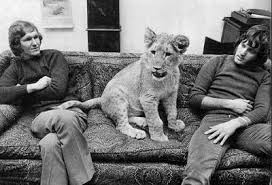 The last few days I've been listening to a great story on audio book, The Lion Called Christian by Anthony Burke and John Rendell. It's the story of two Australian men who bought a lion cub (yes, a lion) from Harrod's Dept. store (yes, a dept. store) in London in 1969 or 1970. They kept the cub in their home in London and they tried to provide for his needs, but when he got to be about 150 lbs., they just couldn't handle the care for him. So, they enlisted the help of George Adamson who rehabilitated the lion into his natural habitat in Kenya.
Their story became popular when footage was uploaded to You Tube a couple of years ago. The footage shows the moment when Christian's former owners "Ace" and John are reunited with the lion after a year of separation. The lion is so amazingly affectionate to the two men that many people found it quite moving, and interest in the story was rekindled. A new edition of the book was published. It's really a remarkable story, and the book itself is quite well written, describing that amazing connection between animals and people.
Here's the link to the video. (And, no, this doesn't mean that I now want to own a lion...although the thought did cross my mind. This story is a great example of a cautionary tale against bringing exotic animals in domestic situations. However, listening to the story does make me want a kitten.)
Friday, May 29, 2009
Collections
 Matrioshka Dolls, or Russian nesting dolls, have long been one of my favorite things to collect. The ones with political figures on them are way to kitchy for me, but I love the traditional ones and some others.
I have several sets of them: a traditional black, red and orange one, a little bit like the image on the left. I also have a winter scene doll and inside are small Christmas tree ornaments, instead of smaller dolls. I have a kind of cool Biblical one that has Mary with the infant Jesus as the biggest doll, then three gray-haired saint-like men in chausibles (the three persons of the Trinity? Joseph and some other saints? don't know). Then the last littlest object is a tiny little candle.
My favorite nesting dolls are the ones that tell stories. Here's one of Goldilocks and the three bears. I like the story-telling dolls because, I guess, of the
 teacher/storyteller in me. I want to use the dolls to tell a story. My favorite set (that I own) tells the story of the turnip. I love this story because it shows how important a role everyone in the family plays--from the littlest to the biggest.
A farmer grows a huge turnip. When it's finally ready to harvest, he goes to his field and tries to pull it up. It won't budge. So he asks his wife to help. It still won't budge. He asks his children to help. No good. He gets the dog to help, the cat to help, and still the turnip won't budge. It's only when he enlists the help of the mouse that he is able to pull up the turnip. Pop! Turnip soup!
The turnip story dolls show, as you might guess, the different people/animals who help to pull the turnip out, starting with the farmer, then the wife, then the kids, then the dog, the cat, and finally ends with the mouse (or a rat).
In one of my unpublished-but-I-have-high-hopes-for stories (a tall tale about a western cowdog named Lightning Lulu), I use an echo of the turnip story. Lulu can't pull the flooded chuck wagon out of the river by herself. She needs the help of the cow, the cat, and all of the other animals. Finally, working together, they rescue the wagon.
Folk arts, like matrioshka dolls, the Russian Easter eggs, quilts, Japanese fans, and even origami appeal to me because of the stories they share. Crazy quilts show a lifetime of little scraps of clothing that a family lived in. The memories enfolded in a sheet of paper or a painted egg or a piece of cloth tell the stories of our lives and help us understand ourselves and others.
Thursday, May 07, 2009
An Awesome Children's Program
Dolly Parton is doing awesome work as "the book lady" with her Imagination Library, a program that donates free books to preschoolers on a monthly basis. I was so honored to have Gobble Gobble Crash chosen as one of their volumes. Here's a little article about her and the program.
Saturday, May 02, 2009
Birds
 Today I cleaned out the bird feeders. Yuck. They get pretty nasty after awhile. But it was a beautiful day for it. It feels so good to be out in the sunshine after being cooped up all winter. During the ice storm (in December) and the cold, snowy winter, it's refreshing to be able to keep the windows open, to breathe in the spring green air.
Everything is bursting into bloom right now. Tonight, my dog and son and I went for a walk, searching for goose nests. We found two, but one was abandoned (a pair of geese was close by, but it seemed odd that they'd let us get so close without causing more of a ruckus. Maybe it was the dog that scared them.Still, I'd think they'd at least honk at us). The other nest only had two eggs in it, and they didn't look healthy. They had blackish spots on them. One was cracked open, but no baby was nearby. Hopefully the groundskeepers haven't done anything to keep them from hatching. I love the geese.
I was never all that interested in birds until the last few years. When I was a teenager, I had a couple of not-so-great experiences with birds that sort of messed me up for awhile. I was taking care of the neighbor's parakeet, who I think was named Gordo. While I was changing the newspaper at the bottom of the cage, he got out. What happened next was awful. He was flying all around their living room (with a cathedral ceiling, so I couldn't get hold of him), and he kept crashing himself into the chimney and their big living room and dining room windows. It was awful. Finally, somehow (I don't remember how), I got him back in his cage. The poor thing must have been a wreck.
I also remember getting occasional birds in our chimney when I was growing up. Seems like once I had to help take care of getting him out. (By the way, a good tip is to throw a blanket over the bird, and then gently take him outdoors.)
But now I like birds. Some are cute and twittery (sparrows), others silently majestic (herons), still others colorful (cardinals and finches). Until I started watching and identifying the birds that came to our feeders, I never realized how many types of birds there were. I always thought most of those little birds as sparrows, but I've identified lots of others: nuthatch, titmouse, finch as well as two or three types of woodpeckers and many others.
So I've put out my thistle seed feeder (thanks to Shirley who got me started on that) and my regular feeder, and I'm soaking my other hummingbird feeder to clean it out.
I noticed on Amazon today that Kevin Henkes has a new book called, "Birds." Looks interesting.
Thursday, April 30, 2009
Some Final Thoughts on Poetry Month
 Today is the last day of April (seems hard to believe) and thus the end of poetry month. But I do hope to post some poems off and on as the weeks continue. And I hope you all will make poetry a part of your lives. One easy way to do that is to listen to a daily broadcast of the Writers' Almanac.
 Posting poems (nearly) every day has been an interesting exercise for me. I'm often hesitant to show any of my work before many, many revisions, critiques by trusted friends, many more revisions, etc. So to publish my work, even on such an informal venue as a blog, feels risky to me. But I also benefited from doing so. Several of you helped me revise poems, which I always find helpful. Plus, I got encouragement along the way to keep at it. That always helps.
Being a writer is an odd life. On the one hand, I have to develop this super-tough skin to weather all sorts of rejections and attempt to stay positive so that I can continue working and writing new things. On the other hand, I have to stay vulnerable and sensitive to the emotions of others so that I can portray an authenticity in my writing as well as stay open to critique and edits. So it sometimes feels a bit strange. I'm usually reluctant to share any work until I feel it is "ready" because experience has taught me to wait. I wait because I can easily become discouraged about a project. Keeping that optimism is very important for maintaining motivation, that drive which keeps progress moving on a project that may never have a single reader, except for me. I dream one day of having a published collection of poetry, but poetry is a hard sell since very few people actually spend time reading it.
Anyway, enough rambling. For today, the last day of poetry month, I'll share one of my favorite poems:
I Wandered Lonely as a Cloud
by William Wordsworth

I WANDERED lonely as a cloud
That floats on high o'er vales and hills,
When all at once I saw a crowd,
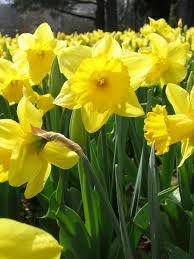
A host, of golden daffodils;
Beside the lake, beneath the trees,
Fluttering and dancing in the breeze.

Continuous as the stars that shine
And twinkle on the milky way,
They stretched in never-ending line
Along the margin of a bay;
Ten thousand saw I at a glance,
Tossing their heads in sprightly dance.

The waves beside them danced; but they
Out-did the sparkling waves in glee:
A poet could not but be gay,
In such a jocund company:
I gazed--and gazed--but little thought
What wealth the show to me had brought:

For oft, when on my couch I lie
In vacant or in pensive mood,
Which is the bliss of solitude;
And then my heart with pleasure fills,
And dances with the daffodils.
Wednesday, April 29, 2009
Well...
I should think of some big blow-out poetry fest to end the month, but sadly, I haven't even posted for a few days. Busy! So, since I have nothing else I can come up with quickly, let's have a throw-back to winter. Here goes:
Sled Ride
On a second-hand sled,
we speed over snowcapped mountains
soaring into snowfall.
We shout
the dips and turns,
this way and that
on our winter roller coaster.
Touching down in one
powdery poof,
a snow pile explodes
around us.
We climb off,
wet, laughing,
grinning with cold teeth.
Sled Ride
On a second-hand sled,
we speed over snowcapped mountains
soaring into snowfall.
We shout
the dips and turns,
this way and that
on our winter roller coaster.
Touching down in one
powdery poof,
a snow pile explodes
around us.
We climb off,
wet, laughing,
grinning with cold teeth.
Tuesday, April 28, 2009
Eagle Cam
My writer friend Marcia told me about this website. It's a live-streaming camera of an eagle's nest in British Columbia. Super, super cool!
Sunday, April 26, 2009

Saturday, April 25, 2009
Inheriting My Grandmother's China
I unwind from a plate
yellowed newspaper from late February
and gaze into the dusty white surface
like looking through a photo album,
reminiscing,
as my grandmother's china becomes mine.
I gently lift from the crate
dinners at Easter
gatherings in late November, and
a family of memories embracing these dishes.
Together,
we stood at your sink after Thanksgiving
in your pale blue kitchen
with stars in the counter top
and a sequined calendar hanging on the wall.
Alone,
my sink full of hot bubbles,
I wash away the dust of time
from dishes which waited for my home,
gently massaging the silver-rimmed surface
with my tattered cloth.
One by one, I wash each dish,
a cup,
a saucer,
plate,
bowl,
drying,
and storing away,
my cabinets now full
of memories
of you.
(First published in Welcome Home, vol. 15, No. 7; July 1998)
yellowed newspaper from late February
and gaze into the dusty white surface
like looking through a photo album,
reminiscing,
as my grandmother's china becomes mine.
I gently lift from the crate
dinners at Easter
gatherings in late November, and
a family of memories embracing these dishes.
Together,
we stood at your sink after Thanksgiving
in your pale blue kitchen
with stars in the counter top
and a sequined calendar hanging on the wall.
Alone,
my sink full of hot bubbles,
I wash away the dust of time
from dishes which waited for my home,
gently massaging the silver-rimmed surface
with my tattered cloth.
One by one, I wash each dish,
a cup,
a saucer,
plate,
bowl,
drying,
and storing away,
my cabinets now full
of memories
of you.
(First published in Welcome Home, vol. 15, No. 7; July 1998)
Thursday, April 23, 2009
Springy thoughts
Today I'll add a poem about magnolia trees (it's a little short poem), but first, I thought I'd comment on a couple of spring sayings or proverbs that have come to mind recently.
The first is:
Spring is sprung,
De grass is riz.
I wonder where dem birdies is.
Them little birds is on the wing.
Now ain't that just absurd.
I always thought the wings
was on the bird!
I vaguely remember this from my childhood, and I remember thinking it was so strange because the grammar was so messed up. Now I find it charming.
The other one is not so much a poem but a proverb:
Bloom where you are planted.
I remember this one from childhood because my mom had a stained-glass decoration that she set in the bay window, which gave this sage advice.
I have been thinking about this because I'm doing so much reading about the pioneer women on the frontier. They were the ones who provided comfort, nourishment, and sustenance for their families as they walked along their covered wagons, camped out in all elements on their way to the west, and then made a home in spartan conditions once they finally reached their destination. "Blooming where you are planted" applies to them in a very poignant way. They did their best to make homes out of nothing, and in doing so, helped to pave the way for all of us who came after them.
The other saying that pops in my mind is:
Put your nose to the grindstone.
I was reading a book recently in which one of the characters was complaining about his work. He didn't want to do it, it was too difficult, etc. Another character responded: "Well, I'll be glad to put my nose to the grindstone as long as the good Lord gives me a grindstone on which to put my nose." Awesome, eh?
Okay, so now, spring is in full bloom, well, almost full bloom here in northeast Indiana. About a quarter of the trees are leafing out, the daffodils are fading to give room for the tulips to put on their show. The azaleas are blooming, the mowers are mowing the Ireland-green grass.
And, the magnolias are in bloom (so this poem is a little premature), but here goes:
Fallen Petals
Lying beneath
magnolia trees,
pink puddles
of springtime
color the grass.
The first is:
Spring is sprung,
De grass is riz.
I wonder where dem birdies is.
Them little birds is on the wing.
Now ain't that just absurd.
I always thought the wings
was on the bird!
I vaguely remember this from my childhood, and I remember thinking it was so strange because the grammar was so messed up. Now I find it charming.
The other one is not so much a poem but a proverb:
Bloom where you are planted.
I remember this one from childhood because my mom had a stained-glass decoration that she set in the bay window, which gave this sage advice.
I have been thinking about this because I'm doing so much reading about the pioneer women on the frontier. They were the ones who provided comfort, nourishment, and sustenance for their families as they walked along their covered wagons, camped out in all elements on their way to the west, and then made a home in spartan conditions once they finally reached their destination. "Blooming where you are planted" applies to them in a very poignant way. They did their best to make homes out of nothing, and in doing so, helped to pave the way for all of us who came after them.
The other saying that pops in my mind is:
Put your nose to the grindstone.
I was reading a book recently in which one of the characters was complaining about his work. He didn't want to do it, it was too difficult, etc. Another character responded: "Well, I'll be glad to put my nose to the grindstone as long as the good Lord gives me a grindstone on which to put my nose." Awesome, eh?
Okay, so now, spring is in full bloom, well, almost full bloom here in northeast Indiana. About a quarter of the trees are leafing out, the daffodils are fading to give room for the tulips to put on their show. The azaleas are blooming, the mowers are mowing the Ireland-green grass.
And, the magnolias are in bloom (so this poem is a little premature), but here goes:
Fallen Petals
Lying beneath
magnolia trees,
pink puddles
of springtime
color the grass.
Wednesday, April 22, 2009
Summer Bright
June days
s t r e t c h
until daytime light
shines at night.
Then when darkness
finally comes,
summer
sends
fireflies.
s t r e t c h
until daytime light
shines at night.
Then when darkness
finally comes,
summer
sends
fireflies.
Tuesday, April 21, 2009
13 Shades of Gray
A couple of years ago, my very artistic, creative friend Sara Nordling (well, I guess she's one of many friends of mine who are creative and artistic--sheesh, how lucky am I?)...anyway, Sara mentioned to me that there are 13 shades of gray on the official color wheel. When she said that, it was one of those moments when you find poetry. "Found poetry" is, basically, just copying whatever you see. (And "found poetry" sounds so much better than cheating or stealing, doesn't it?) Anyway, it was in that moment that I realized "13 shades of gray" could be an intriguing title to a book, or, as my husband suggested to me over lunch today, it could also be the title to a poem. So, here goes:
13 Shades of Gray
The color wheel spins
shades of reds and blues,
yellows and purples.
in whirling carnivals
of color.
But what of the grays?
the charcoal,
ecru,
ashy,
tawny,
dusty
shades of gray?
Those blurry lines
that zigzag
across my life
in smudges
and smears?
The whys
and wherefores,
unanswered questions
unstated dreams
and unfinished sentences
that linger in smoky clouds around me?
Within the kaleidescope of
canary yellow
crimson red
lilac
chartreuse
and neon pink,
I stand,
as 13 shades
color me
gray.
13 Shades of Gray
The color wheel spins
shades of reds and blues,
yellows and purples.
in whirling carnivals
of color.
But what of the grays?
the charcoal,
ecru,
ashy,
tawny,
dusty
shades of gray?
Those blurry lines
that zigzag
across my life
in smudges
and smears?
The whys
and wherefores,
unanswered questions
unstated dreams
and unfinished sentences
that linger in smoky clouds around me?
Within the kaleidescope of
canary yellow
crimson red
lilac
chartreuse
and neon pink,
I stand,
as 13 shades
color me
gray.
Monday, April 20, 2009
Growing Spring
Trees stand
bare in winter,
skeletal,
thin.
In spring rains
and warmer days,
trees
grow
shadows.
bare in winter,
skeletal,
thin.
In spring rains
and warmer days,
trees
grow
shadows.
Sunday, April 19, 2009
Field Day Fun
 This afternoon I'll add one of my field day poems. Several years ago, I wrote about 20 poems on all the different events of field day. Field day was definitely my favorite experience of elementary school. We'd look forward to it all year. I am not athletic in the slightest, so it wasn't showing off my skills or the competition that I looked forward to. It was just the fun of playing games, eating popsicles, and being outdoors for a day.
Water Balloon Volleyball
The net is up. The teams are poised,
the water bombs are set.
Anne Marie steps up to serve.
She eyes the sagging net.
The bomb is launched, away it flies,
but gets there with a splash.
The bomb explodes in Richie's hands,
which starts the water bash.
A splash on us. A splash on them,
oh, who will win this game?
Balloons are raining everywhere--
be careful when you aim!
The game goes on. It's getting hot.
Our server tries again.
More points for us. More points for them.
The score is ten to ten.
We're low on bombs. We're getting soaked.
I hope the game's done soon.
Then comes the call: "Game point!" we hear.
It's getting close to noon.
The final bomb then heads our way,
but doesn't clear the net.
And even thought we win the game,
we most liked getting wet.
Friday, April 17, 2009
A slight digression
I'm too tired this evening to write a poem or try to find an old one, so I'll write instead about a couple of other things.
First, I've recently been watching a fantastic PBS series. I first watched Frontier House. My dad reminded me of this show when I was telling him of my research into the 1880s pioneer/frontier life in Kansas Territory (Colorado today). Then I learned from my friend Sara that PBS had produced other projects in this series, so I just finished watching 1900 House.
The idea is to take a modern-day family and have them live in period dress, in a house made up just like it would have been in the historical period, and see how they adapt. So, in Frontier House, three different families traveled in a covered wagon mini-journey to Montana and had to scratch out a living with few resources and lots of hard work for five months. The five months ended in the early fall, and a panel of historical judges decided which families would be best prepared to survive the winter.
In 1900 House, one family lived in a house (more like a "rowhouse" as we Americans would think of it) in south London which was completely fitted in 1900 furnishings, appliances, etc. The women wore corsets and heavy layers of long dresses. The father shaved with a cut-throat razor. The thing the women missed most was leisure time and shampoo. For the latter, they tried all sorts of revolting concoctions like egg yolks and lemon juice, etc. in place of shampoo. It all sounded horrid. And the house was so dark! Gas lamps had been installed in the first floor, but they only had parafin candles on the second floor, but the heavy drapes and dark wallpaper and big, oversized furnishings made the rooms seem oppressive and gloomy--even in broad daylight.
The striking thing for me from watching both of these shows is just how much time we have for other things now. In both Frontier House and 1900 House, two of the women mentioned that washing machines seem like magic compared to the older ways of washing clothing. Having hot water within mere seconds on a tap flowing into the kitchen and into the bathrooms and into the tubs and showers...wow! And having light in the evening makes such a huge difference. And those are just the basics. Of course, there was no TV, no computer, communication with the outside world was very limited. But taking care of the house--the cooking, the cleaning, the washing, the shopping--all of that would have consumed the housewife's day, and those days would mean heavy, difficult physical labor, only to have the energy at the end of the day to fall into bed.
There are lots of other projects in this PBS series: Texas Ranch House, 1940s House (in England, complete with bomb raid drills, etc.), Colonial House, and probabl others I haven't found yet.
On another note, I thoroughly enjoyed my visit to Cedarville Elementary just north of Fort Wayne this afternoon. I spoke to the K-3rd graders about my books, where ideas come from, and the writing process. It is always such a joy to visit with the children and hear their thoughts and questions.
First, I've recently been watching a fantastic PBS series. I first watched Frontier House. My dad reminded me of this show when I was telling him of my research into the 1880s pioneer/frontier life in Kansas Territory (Colorado today). Then I learned from my friend Sara that PBS had produced other projects in this series, so I just finished watching 1900 House.
The idea is to take a modern-day family and have them live in period dress, in a house made up just like it would have been in the historical period, and see how they adapt. So, in Frontier House, three different families traveled in a covered wagon mini-journey to Montana and had to scratch out a living with few resources and lots of hard work for five months. The five months ended in the early fall, and a panel of historical judges decided which families would be best prepared to survive the winter.
In 1900 House, one family lived in a house (more like a "rowhouse" as we Americans would think of it) in south London which was completely fitted in 1900 furnishings, appliances, etc. The women wore corsets and heavy layers of long dresses. The father shaved with a cut-throat razor. The thing the women missed most was leisure time and shampoo. For the latter, they tried all sorts of revolting concoctions like egg yolks and lemon juice, etc. in place of shampoo. It all sounded horrid. And the house was so dark! Gas lamps had been installed in the first floor, but they only had parafin candles on the second floor, but the heavy drapes and dark wallpaper and big, oversized furnishings made the rooms seem oppressive and gloomy--even in broad daylight.
The striking thing for me from watching both of these shows is just how much time we have for other things now. In both Frontier House and 1900 House, two of the women mentioned that washing machines seem like magic compared to the older ways of washing clothing. Having hot water within mere seconds on a tap flowing into the kitchen and into the bathrooms and into the tubs and showers...wow! And having light in the evening makes such a huge difference. And those are just the basics. Of course, there was no TV, no computer, communication with the outside world was very limited. But taking care of the house--the cooking, the cleaning, the washing, the shopping--all of that would have consumed the housewife's day, and those days would mean heavy, difficult physical labor, only to have the energy at the end of the day to fall into bed.
There are lots of other projects in this PBS series: Texas Ranch House, 1940s House (in England, complete with bomb raid drills, etc.), Colonial House, and probabl others I haven't found yet.
On another note, I thoroughly enjoyed my visit to Cedarville Elementary just north of Fort Wayne this afternoon. I spoke to the K-3rd graders about my books, where ideas come from, and the writing process. It is always such a joy to visit with the children and hear their thoughts and questions.
Thursday, April 16, 2009
Half-way through the month!
I love poetry month, partly because I love spring. Spring can be so depressing--the dreary, cold, windy days that hearken back to winter. But it can also be so wonderfully invigorating on the milder, sunny, lovely days. We have one of the latter today, after two of the former, and, my, am I glad! And all that weather out there just makes me want to write.
A couple of other miscellaneous tidbits before the poem:
Neigh!!
Just in case you're in the mood to hear some neighing horses (for whatever reason), here's a good website.
Baseball!
Tonight is opening night for the (weirdly named) Fort Wayne Tin Caps. They are supposed to have fireworks after the game, so I'll be keeping an eye on Lucy, the giant golden retriever who is terrified of thunder and fireworks.
School visit!
Tomorrow I'm looking forward to visiting with the students and teachers at Cedarville Elementary to finish off their young authors week. What a privilege to share writing with kids!
Now the poem:
Awake
In my first
wakeful moments,
I lie, eyes open,
before I remember
the history of yesterday,
the future of today,
before my thoughts
resemble patterns of my own,
my day is
unburdened by guilt,
unpressured by dreams.
I simply
am.
A couple of other miscellaneous tidbits before the poem:
Neigh!!
Just in case you're in the mood to hear some neighing horses (for whatever reason), here's a good website.
Baseball!
Tonight is opening night for the (weirdly named) Fort Wayne Tin Caps. They are supposed to have fireworks after the game, so I'll be keeping an eye on Lucy, the giant golden retriever who is terrified of thunder and fireworks.
School visit!
Tomorrow I'm looking forward to visiting with the students and teachers at Cedarville Elementary to finish off their young authors week. What a privilege to share writing with kids!
Now the poem:
Awake
In my first
wakeful moments,
I lie, eyes open,
before I remember
the history of yesterday,
the future of today,
before my thoughts
resemble patterns of my own,
my day is
unburdened by guilt,
unpressured by dreams.
I simply
am.
Wednesday, April 15, 2009
A short poem today
 My cat, Sophie, was a gift to me from my sixth grade students at Emmaus Lutheran School in Alhambra, California, many moons ago. She is 14 years old this month. We think she's almost completely deaf now, but other than that, she shows few signs of aging. She definitely picks her favorite people, who are: me, my husband, and our son has limited access. Surprisingly, our giant golden retriever and Sophie have become buddies in the last couple of years. They sit together on the couch with me. I love animals of all kinds, but especially cats and dogs. Pets can be companions and, for some people, can help them in really significant ways. One young woman I know who was struggling with depression and having a very hard time coping with normal life. She got a puppy, and ever since then has been fully functional, doing really well with her life. It's been amazing to see the turn-around in her.
So here's a poem about Sophie. This poem could be easily copied by simply using picture language. The whole thing is just one sentence, using just three words metaphorically.
Weaver
My black cat
weaves
between my ankles
like a
delicate
silk
scarf.
Tuesday, April 14, 2009
Summer Storm
 I wrote this poem one day after a thunderstorm crashed through the neighborhood. It only lasted 15 or 20 minutes, but it was one of those drenching, dramatic storms that really get your attention.
This is the type of poem that kids could easily create, and it really challenges the use of active verbs (or gerunds, technically speaking). Speaking of gerunds, it might be interesting to try writing it in the present tense too: "Storm comes / Sun hides /" etc. It would be a good thing for children to recognize and analyze. Which form is stronger? With "-ing" endings or present tense endings? How does it change the feeling of the poem?
Also, notice the construction. The subject of each line is repeated in backward order in the second half of the poem. "Scurry, scramble" is the center point. So, have kids write 8-10 subjects, with simple verbs (or gerunds) following each, leading up to a pivotal point in the poem. Then, using the same subjects in reverse order, have the action diminish.
Oh, and another quick thought. Thank you to those of you who have suggested edits to my previous poems! I love the interaction, and I know that my work only can get stronger with good critique. So, thank you!
Summer Storm
Storm coming
Sun hiding
Birds skittering
Sky darkening
Wind gusting
Rain plinking
Lightning flashing
Gutter flooding
Thunder rumbling
Water pouring
Scurry, scramble! Get inside!
Water draining
Thunder quieting
Gutter trickilng
LIghtning fading
Rain dripping
Wind calming
Sky clearing
Sun peeking
Storm
quiet
now
Sunday, April 12, 2009
Not Yet
 "Joseph of Arimathea brought 75 pounds of myrrh to an unused tomb…"
They wrapped
Jesus' bloody body in myrrh,
the scent of death.
This was His baby gift
from magi
his baby gift
became a swaddling cloth
in death
but sweet lilies line
the white-robed altar today
their perfume
the alleluias of life,
resurrection
but even while swooning in
Easter's lily-laden perfume,
here,
for now,
the scent of myrrh,
the bitterness of death
hangs in the air,
lingering in
sacred spaces
Saturday, April 11, 2009
How things come together
Today's poem comes from 8 years ago, but it's really a mish-mash of several poems I've written over the last few years. Every once in awhile, when I visit Colorado, my childhood home, I sense with full force the history of the place, the westward expansion, the hope for gold, the pioneering families struggling to eke out a living. There's a romance in it, but also a sense of connection to the land, the mountains, this place where my first memories were made. These thoughts over the years have finally melded into a work of fiction that I am currently writing.
June 19, 2001, Touchdown
In the flat plains
north of Denver,
our plane bumps
onto the runway
in midafternoon sun.
Suddenly, I am in 1880,
a settler
in the red dirt.
My hair, in a bun,
my dress,
long as Sunday,
my hands,
rough and calloused.
I shield my eyes from the sun
as I look for my man
through dusty wind,
waiting for gold,
settling for flour
to feed my family.
A memory engulfs me:
the claustrophobia
of trees,
leaves,
bushes,
ivy,
grass
of western Pennsylvania,
crowding thick upon me.
But now I open my eyes,
stretch out my
lungs,
wide as miles,
and
breathe.
June 19, 2001, Touchdown
In the flat plains
north of Denver,
our plane bumps
onto the runway
in midafternoon sun.
Suddenly, I am in 1880,
a settler
in the red dirt.
My hair, in a bun,
my dress,
long as Sunday,
my hands,
rough and calloused.
I shield my eyes from the sun
as I look for my man
through dusty wind,
waiting for gold,
settling for flour
to feed my family.
A memory engulfs me:
the claustrophobia
of trees,
leaves,
bushes,
ivy,
grass
of western Pennsylvania,
crowding thick upon me.
But now I open my eyes,
stretch out my
lungs,
wide as miles,
and
breathe.
Friday, April 10, 2009
Hope
When we lived in Pittsburgh, I was in and out of our church fairly often. I usually went in through the side entrance, which was closer to our parsonage.
Every year, on Maundy Thursday afternoon or Good Friday morning, the order of Easter lilies would be delivered and placed in the stairwell near the sacristy. Seeing those lilies, after the arduous season of Lent, especially at the end of Holy Week made such an impression on me that every year I wrote poems about the lilies. The scent of Easter lilies, to me, is the sweetest for so many reasons.
Hope
Into the darkness,
the gloom,
the despair
of the tomb
is the scent
of hope,
waiting.
Every year, on Maundy Thursday afternoon or Good Friday morning, the order of Easter lilies would be delivered and placed in the stairwell near the sacristy. Seeing those lilies, after the arduous season of Lent, especially at the end of Holy Week made such an impression on me that every year I wrote poems about the lilies. The scent of Easter lilies, to me, is the sweetest for so many reasons.
Hope
Into the darkness,
the gloom,
the despair
of the tomb
is the scent
of hope,
waiting.
Wednesday, April 08, 2009
Woman at Prayer

From a slab of cold marble,
pale as death,
weighty and strong,
an artist
with pictures in mind
and art in his chisel
creates a delicate face,
full of health, beauty, movement and grace.
From a rock, stone-cold,
dead, hard,
arises a phoenix,
a creation
aglow with vigor.
And she looks at me
with eyes, light and dancing,
bidding me to come
and pray.
Tuesday, April 07, 2009
Forest Fears
 Today's poem is one I wrote about 9 years ago. As I re-read my journals from years ago, I am encouraged and frightened. Encouraged, because I think that what I wrote wasn't terrible, and frightened because I'm afraid I've "lost" it. I believe--at least I like to believe--that many writers feel this way. That I've already written my best stuff, that there's not much left in me to write, etc.
So the key is--wait for it--to keep writing! Whether it's crummy or good, boring or engrossing, just keep at it. First drafts usually stink. Or better put, first drafts may have good potential or have a glimmer or something good in them, but really aren't the best a writer can create. Revision is always the key.
But in my experiment this month, I'm boldly and nervously putting out some rougher drafts to stick with my challenge of every-day-poetry-writing. With that introduction, here is "Forest Fears."
Forest Fears
Hansel and Gretel: lost and alone,
Little Red Riding Hood: met by a rude wolf,
Snow White: escaped an evil queen,
Goldilocks: trouble.
So it's no wonder when
forest shadows creep closer,
and day fades fast,
my feet walk faster,
my heart pounds,
my stomach quivers.
But when I am safe at home,
cozy, under blankets,
I remember that
Hansel and Gretel: found their good father.
Red Riding Hood: outsmarted the wolf.
Snow White: won her prince.
And Goldilocks: learned to stick close to home.
Monday, April 06, 2009
Two poems for today
I'm finding some old files of "opposite poems" I wrote a few years ago to fill up my (maybe-not-so-wise-idea of) month full of poems. Here are two. I was trying to think of all sorts of opposites. I had the playground and baseball on the mind when I wrote these. They are just silly little poems that play with the opposite concepts and words.
Back - Forth
pump -- reach
bend -- glide
back -- forth
swing -- ride
I -- fly
you --soar
just -- one
push -- more!
Better/Worse
Am I a better batter than him?
Is he a badder batter than me?
Is badder
better?
Is better
badder?
Back - Forth
pump -- reach
bend -- glide
back -- forth
swing -- ride
I -- fly
you --soar
just -- one
push -- more!
Better/Worse
Am I a better batter than him?
Is he a badder batter than me?
Is badder
better?
Is better
badder?
Sunday, April 05, 2009
Day 5, Poem 4
I know. I'm one poem behind. I was out of town on Friday, so I didn't have time to post a poem.
I love the simplicity of haiku. I have written a picture book manuscript in all haiku stanzas about a young Japanese girl who moved to the U.S. and adapts by sharing her origami with a new friend.
Traditional haiku is 5 syllables in the first line, 7 in the second, and 5 in the third and last. Typically, also, it revolves around themes that have to do with nature or the seasons.
Here is a haiku for Palm Sunday:
***
Palms and hosannas,
songs and prayers we offer, Lord,
such small gifts we bring.
But our gifts cannot,
do not compare to the One
who gave everything.
***
I love the simplicity of haiku. I have written a picture book manuscript in all haiku stanzas about a young Japanese girl who moved to the U.S. and adapts by sharing her origami with a new friend.
Traditional haiku is 5 syllables in the first line, 7 in the second, and 5 in the third and last. Typically, also, it revolves around themes that have to do with nature or the seasons.
Here is a haiku for Palm Sunday:
***
Palms and hosannas,
songs and prayers we offer, Lord,
such small gifts we bring.
But our gifts cannot,
do not compare to the One
who gave everything.
***
Saturday, April 04, 2009
From Me to You
My letter flies,
My letter floats.
It even takes the train.
Through gloomy nights
and sunny days,
and even in the rain.
It's on a truck.
The miles add up.
It's far away from here.
It's on a long,
cross-country trip,
but should be getting near.
It finally comes
to your front door.
It took so long to haul!
My letter flew
from me to you,
but next time I'll just call!
My letter floats.
It even takes the train.
Through gloomy nights
and sunny days,
and even in the rain.
It's on a truck.
The miles add up.
It's far away from here.
It's on a long,
cross-country trip,
but should be getting near.
It finally comes
to your front door.
It took so long to haul!
My letter flew
from me to you,
but next time I'll just call!
Thursday, April 02, 2009
Walking in the Woods
After winter's cruelty:
icy trees,
ground, frozen hard as stone,
eternal nights, brightened only with dim candlelight,
I am a stranger to sunlight,
layered in polyfill, wool,
wrapped in a scarf,
capped with a hat.
But now,
I shed winter skin,
stepping onto the forest floor,
the carpet rolled out,
green tufts of grass,
strewn with wildflowers,
and I walk
into springtime.

icy trees,
ground, frozen hard as stone,
eternal nights, brightened only with dim candlelight,
I am a stranger to sunlight,
layered in polyfill, wool,
wrapped in a scarf,
capped with a hat.
But now,
I shed winter skin,
stepping onto the forest floor,
the carpet rolled out,
green tufts of grass,
strewn with wildflowers,
and I walk
into springtime.

Wednesday, April 01, 2009
April Fool's Day
Okay, well, here's the first draft. Any suggestions for edits?
****
An April Fool's Day Limerick
On the first day of April each year,
I always get shivers of fear.
Will I get worms in my lunch?
Or flies in my punch?
Today's a good day to disappear OR It's best to be absent--that's clear!
***
I don't like that last line (which is why I have two options, neither of which I like). So I reversed the whole thing. I'm still not sure if it works, but I think the last line is better.
What do you think of option B?
***
An April Fool's Day Limerick
Some find this day filled with cheer,
but I find myself shivering in fear.
Will I get worms in my lunch?
Or flies in my punch?
It's the scariest day of the year!
****
An April Fool's Day Limerick
On the first day of April each year,
I always get shivers of fear.
Will I get worms in my lunch?
Or flies in my punch?
Today's a good day to disappear OR It's best to be absent--that's clear!
***
I don't like that last line (which is why I have two options, neither of which I like). So I reversed the whole thing. I'm still not sure if it works, but I think the last line is better.
What do you think of option B?
***
An April Fool's Day Limerick
Some find this day filled with cheer,
but I find myself shivering in fear.
Will I get worms in my lunch?
Or flies in my punch?
It's the scariest day of the year!
Subscribe to:
Posts (Atom)